
How Foreign Entrepreneurs Can Enter the U.S. Market: A Step-by-Step Guide
A practical sequence for foreign founders entering the U.S.: test demand, choose a structure, get an EIN and bank account, register for taxes and set up…
Insights
What foreign founders need to sell online in the U.S.: marketplaces, payment KYC, sales tax for remote sellers, product compliance, imports, 3PL and returns.
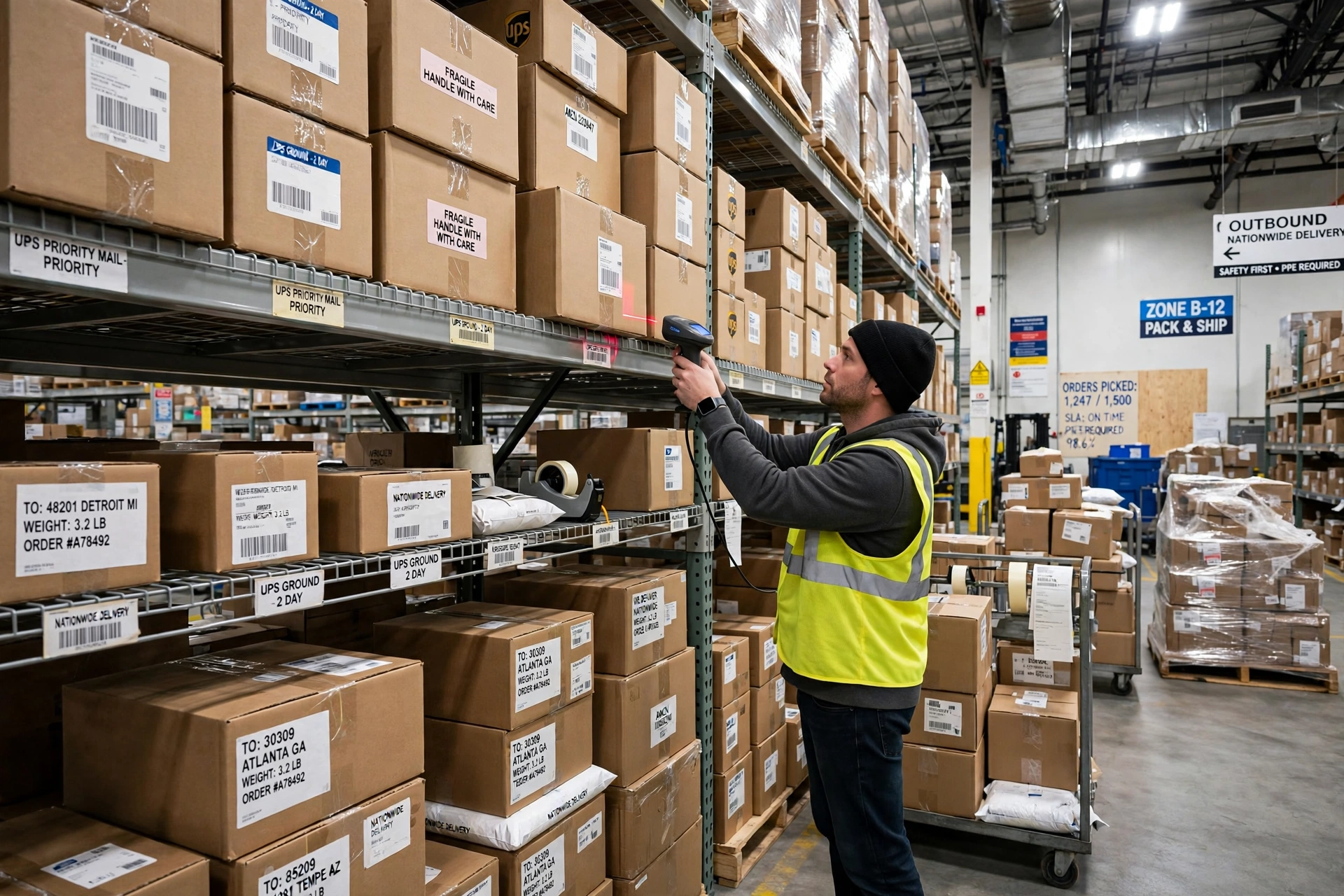
The U.S. is the market most e-commerce founders want, and in some ways the easiest to enter: you can list products on a marketplace within weeks. It is also a market where small compliance gaps (an unregistered sales tax account, a product without the right certificate, a payment account frozen during verification) can stop sales overnight.
This article is for founders outside the U.S. who plan to sell physical products online to U.S. customers, through marketplaces, their own store, or both. It covers the honest pros and cons and a practical launch sequence.
| Advantages | Disadvantages |
|---|---|
| Very large customer base reachable through a few platforms | Intense competition and high advertising costs on marketplaces |
| Marketplaces handle traffic, checkout and much of the sales tax | Platform rules and account suspensions are outside your control |
| Mature 3PL, parcel and payments infrastructure | State-by-state sales tax and product compliance |
| A U.S. presence builds trust with buyers and partners | Customers expect fast delivery and easy returns |
Most foreign sellers form a U.S. LLC or corporation, obtain an EIN and open a U.S. business bank account. It is not always mandatory: Amazon, for example, accepts sellers from other countries and can pay out to a non-U.S. bank account. But many payment processors require a U.S. entity, and a U.S. entity simplifies taxes, contracts with 3PLs and wholesale accounts. Our U.S. tax guide explains the reporting that follows, including Form 5472 for foreign-owned single-member LLCs.
Amazon’s U.S. seller registration asks for a government-issued ID, proof of residential address dated within the last 180 days, a bank account, an internationally chargeable credit card, business registration details and tax information. Identity is confirmed by photo or a video call with an Amazon associate. Make sure every document shows the same name and address exactly; mismatches are a common reason for delays.
If you plan to use Amazon Brand Registry, you will need a pending or registered trademark. See our step-by-step trademark guide.
For your own store you need a processor such as Stripe, PayPal or Shopify Payments. Stripe, for example, requires a U.S. account holder to be a business registered in the U.S. (or a person located in the U.S.), with a physical business address (no PO boxes), and verifies the entity name, EIN, the representative’s SSN or ITIN and the address. Founders without an SSN should confirm with the processor how verification works for them before launch.
The U.S. has no national sales tax. Each state sets its own rules, and since the Supreme Court’s 2018 Wayfair decision, states can require out-of-state sellers to collect tax once sales into the state pass an economic threshold. Marketplaces generally collect and remit tax on sales made through them as “marketplace facilitators”; sales through your own website are your responsibility. Our article on sales tax nexus explains how thresholds work.
Low-value shipments of $800 or less used to enter duty-free with minimal paperwork. That de minimis treatment has been suspended for imports from all countries since August 29, 2025, and the statutory exemption is scheduled to end on July 1, 2027. In practice, shipping single parcels from abroad is now more expensive and slower, which favors importing in bulk to a U.S. warehouse.
A third-party logistics provider (3PL) receives your inventory, stores it, ships orders and processes returns. Compare receiving, storage, pick-and-pack and return fees, integration with your store and marketplaces, and where the warehouse sits relative to your customers. Decide in advance what happens to returned goods: restock, refurbish, liquidate or dispose.
Watch out: Holding inventory in a U.S. state can by itself create a sales tax obligation and, for some taxes, a filing obligation in that state. Inventory in an Amazon fulfillment center counts too. Check where your goods are stored, not only where your customers are.
The Arizona Commerce Authority describes the state as within a one-day truck drive of more than 86 million consumers, including Southern California, with six ports of entry on the Mexico border. For a foreign seller, Phoenix Metro is a well-established distribution hub that can reach West Coast and Southwest customers quickly without warehousing in California itself.
If you store inventory or sell from Arizona, you will need an Arizona transaction privilege tax (TPT) license. The state retail rate is 5.6%; combined rates vary by city, for example 9.1% in Phoenix and 7.8% in Chandler. Our Arizona guide covers licensing in detail.
Not always. Amazon accepts sellers from many countries and can pay out to foreign bank accounts. A U.S. entity still helps with payment processors, 3PL contracts, wholesale and taxes.
Only where you have nexus, such as passing a state’s economic threshold or storing inventory there. Marketplaces usually collect tax on marketplace sales for you.
You can, but with de minimis suspended, each low-value parcel now needs a customs entry and may owe duty. Many sellers switch to bulk imports into a U.S. warehouse.
Stripe verifies an SSN or ITIN for the account representative of a U.S. business. Ask the processor about your situation before launch, and consider whether an ITIN application makes sense.
Common examples are food and supplements (FDA), radio-frequency electronics (FCC) and children’s or other regulated consumer products (CPSC). Check your product category before you order inventory.
BDC helps foreign founders plan and launch U.S. e-commerce operations, coordinating company setup, banking, tax registrations and logistics partners. Confirm the tax and compliance points for your products with licensed professionals. See our services or contact us.
Keep reading
A practical sequence for foreign founders entering the U.S.: test demand, choose a structure, get an EIN and bank account, register for taxes and set up…
A practical playbook for cross-border partnerships: negotiating, writing contracts that hold, checking partners, setting payment terms and handling time zones, export rules and imports.
Forming a U.S. company does not let you live or work in the U.S. Here is how the E-2, L-1 and EB-5 routes work for business…
Talk to BDC
Tell us where you are and what you want to achieve. We usually reply within one business day with clear next steps, whether you are entering the U.S. market, buying a business or planning your exit.