
How to Sell Your Business When You Are Ready to Retire
A calm, practical plan for owners who built a business over decades and are ready to step away: timeline, preparation, buyers, taxes and the handover.
Insights
How buyers and lenders actually value a small business: SDE vs EBITDA, add-backs, multiples, working capital and why owner dependence matters.
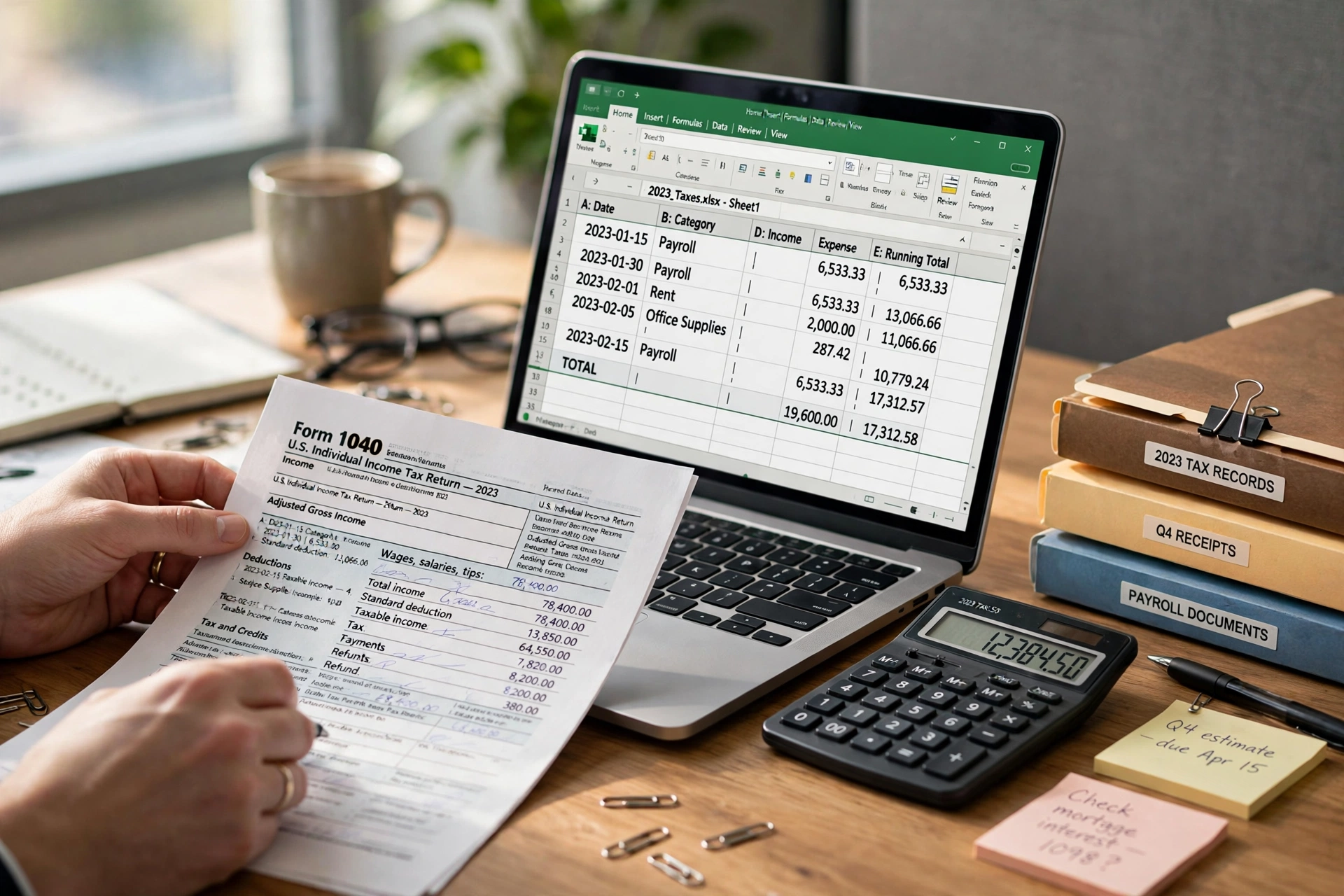
“What is my business worth?” is usually the first question an owner asks when thinking about retirement or a sale. It is also the question buyers ask, from the other side of the table. The honest answer is that a business is worth what a qualified buyer will pay and a lender will finance, based on the cash it reliably produces.
This article explains, in plain language, how that number is built: the earnings measures buyers use, the adjustments that go into them, the multiples applied to them and the factors that push value up or down. It is written for owners who want a realistic starting point and for buyers who want to check an asking price.
Seller’s discretionary earnings (SDE) show the total financial benefit one full-time owner-operator gets from the business in a year. It starts with pre-tax profit and adds back the owner’s salary, owner benefits, interest, depreciation and amortization, plus personal or one-time expenses.
EBITDA means earnings before interest, taxes, depreciation and amortization. In a sale, it is usually adjusted EBITDA: the same add-backs, except that a market-rate salary for a manager to replace the owner is treated as a cost. EBITDA assumes the buyer is an investor, not the person working in the business every day.
| SDE | Adjusted EBITDA | |
|---|---|---|
| Typical use | Owner-operated businesses | Businesses with a management team |
| Owner’s salary | Added back in full | Replaced with a market-rate manager salary |
| Typical buyer | Individual who will run it | Investor, competitor, search fund, larger company |
The figures below are an illustrative example only, not data from any real business.
| Item (example) | Amount | Why it is added back |
|---|---|---|
| Pre-tax net income on tax return | $150,000 | Starting point |
| Owner’s salary and payroll taxes | $90,000 | Goes to the owner |
| Depreciation and amortization | $30,000 | Non-cash expense |
| Interest on business loans | $10,000 | Depends on financing, not operations |
| Owner’s personal vehicle | $8,000 | Personal benefit |
| One-time legal settlement | $12,000 | Not expected to repeat |
| SDE | $300,000 | |
| Less market-rate general manager | ($75,000) | Cost of replacing the owner |
| Adjusted EBITDA | $225,000 |
Buyers will challenge add-backs that look like normal operating costs. Family members on payroll who actually work, a “one-time” repair that happens every year, or cash sales that never reached the books will not be accepted. If income is not on your tax return, lenders will not count it.
Watch out: lenders making SBA-backed acquisition loans now test repayment on historical or adjusted historical earnings, not projections. Add-backs you cannot document with returns, invoices and bank statements may simply be ignored.
Price is commonly expressed as earnings multiplied by a number that reflects risk. Continuing the example, if a buyer and seller agreed on a multiple of 2.5 times SDE, the price would be $750,000. At 3.0 times, it would be $900,000. These multiples are chosen for illustration; real multiples vary by industry, size, location and the market at the time of sale, and should come from a qualified valuation professional or broker with current comparable data.
What usually pushes a multiple up:
What usually pushes it down: declining sales, heavy customer concentration, deferred maintenance on equipment, legal or tax problems, a short lease, and dependence on the owner.
A manufacturer, contractor or distributor with significant equipment, vehicles and inventory has a floor under its value: the assets could be sold even if earnings fall. Buyers will look at both the earnings value and the fair market value of the assets, and lenders may lend against them.
A service business, such as an agency, consulting firm or cleaning company, may own little equipment. Most of its value is goodwill: customer relationships, reputation and staff. That value is real, but it depends on keeping customers and people after the sale, so buyers look harder at retention and transition.
The SBA’s guidance for buyers lists several valuation approaches, including capitalized earnings, excess earnings, cash flow, tangible assets and specific intangible assets. Many valuations combine more than one.
A buyer expects the business to come with enough working capital to operate the day after closing: inventory, receivables and prepaid items, minus payables. Many purchase agreements set a target level, often based on a recent average, and adjust the price up or down at closing if the actual level differs.
Example only: if the agreed target is $100,000 and the business delivers $80,000, the price may be reduced by $20,000. Discuss this early so it does not surprise you at the closing table.
If you are the main salesperson, the only estimator, the person every customer calls and the one who holds the supplier relationships, a buyer is not sure what remains when you leave. The usual responses are a lower multiple, a longer required transition, an earn-out tied to future results, or a larger seller note. Building a second layer of management and documenting how the business runs are among the most effective ways to raise value before a sale. See How to Sell Your Business When You Are Ready to Retire.
In Arizona, anyone paid to market and negotiate the sale of a business generally needs a real estate broker license (A.R.S. 32-2101). An opinion of value used in a sale often comes from a licensed broker or a credentialed valuation professional. Business Development Center helps owners prepare clean financials and add-back schedules, and works with licensed brokers, CPAs and attorneys on the transaction itself. Learn more at Buy or Sell a Business.
Please confirm your own valuation and tax position with a licensed professional before setting a price.
Try it with your numbers. Our free business value calculator works out your SDE and shows a rough range from published industry multiples. It is a starting point for a conversation, not an appraisal.
For most small businesses, buyers focus on earnings, not revenue. Two companies with the same sales can have very different profits and very different values.
Use SDE if the buyer is likely to be an owner-operator. Use adjusted EBITDA if the business has managers in place and is likely to attract investors or larger companies. Many sellers prepare both.
Lenders and most buyers will not count unreported income. Valuation is based on what you can document.
Reduce owner dependence, diversify customers, add recurring revenue, keep books clean for several years, and secure a long assignable lease.
If you own the building, it is usually valued separately from the business and can be sold or leased to the buyer.
Keep reading
A calm, practical plan for owners who built a business over decades and are ready to step away: timeline, preparation, buyers, taxes and the handover.
How SBA 7(a) loans and seller notes fit together under SOP 50 10 8.1, the 2026 citizenship rule, and what foreign buyers can use instead.
How owners can hand a business to children, managers or employees: family transfers, management buyouts, ESOPs, gradual transfers and buy-sell agreements.
Talk to BDC
Tell us where you are and what you want to achieve. We usually reply within one business day with clear next steps, whether you are entering the U.S. market, buying a business or planning your exit.